The term AI marketing agency gets thrown around a lot. But most businesses don't know what it actually means in practice — or how it differs from a traditional agency with a Canva subscription.
This guide explains what a true AI marketing agency does, how the delivery model works, and what to look for when choosing one.
What makes a marketing agency "AI-powered"?
A genuine AI marketing agency doesn't just use AI tools occasionally. It builds AI systems that are embedded into every part of the marketing workflow:
- Content creation — AI drafts SEO articles, ad copy, email sequences, and social posts at scale. A human strategist reviews and publishes.
- Reporting — Instead of manually pulling data from 5 platforms, AI aggregates it, identifies trends, and writes the monthly narrative automatically.
- Lead qualification — AI scores inbound leads, routes enquiries, and triggers follow-up sequences without human intervention.
- Ad optimisation — AI generates 10+ ad variants per campaign and analyses performance signals weekly to reallocate budget.
- Competitor monitoring — Automated systems track competitor content, ads, and rankings — delivering a weekly digest to your inbox.
The AI marketing stack in practice
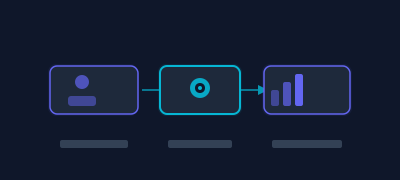
Here's what the technical delivery looks like inside a modern AI marketing operation:
- Large language models (like Claude or GPT-4) handle content generation, copy, and analysis
- Workflow automation (Make.com, n8n) connects all platforms and triggers actions automatically
- CRM integration (HubSpot) routes and scores leads without manual input
- Reporting pipelines pull from Google Analytics 4, Search Console, ad platforms, and booking tools simultaneously
The result is a marketing operation that runs continuously — not just during business hours.
What does an AI marketing agency actually deliver?
A full-service AI marketing agency should cover:
- SEO content — keyword-targeted articles published monthly
- Google Ads and Meta Ads — campaign management with AI-generated copy
- Social media — AI-repurposed content published automatically
- Email marketing — automated sequences and newsletters
- CRM automation — lead scoring, follow-up, pipeline management
- Monthly AI-generated performance reports
- WhatsApp automation and booking systems
How to choose an AI marketing agency
Ask these questions before signing:
- What percentage of work is genuinely automated? If the answer is "we use AI to help our writers," that's a traditional agency with AI tools. Real AI agencies run automated pipelines.
- Can you show me your reporting workflow? A real AI agency generates reports automatically. If a human is building them in PowerPoint, it's not AI-powered.
- Do you lock clients into long contracts? Confidence in results means month-to-month terms. Long contracts protect the agency, not the client.
- What happens to the systems you build? The AI workflows built for your business should integrate permanently into your stack — not disappear when you stop paying.
See how Scalviq delivers AI marketing
Get a free 10-point AI audit of your business — delivered in 30 seconds.
Run free AI audit →The bottom line
AI marketing is not a buzzword. It's a fundamentally different delivery model that produces better results, faster, at a lower cost per outcome than traditional agency work. The businesses that adopt it now will have a structural advantage over those who don't for years to come.
The question isn't whether to use AI in your marketing — it's whether your agency is genuinely using it, or just saying they are.